
by Gizem Daver
Rome May 07, 2026 – DAILY SABAH

From Arabic numerals to Italian coffee culture, historian Alessandro Vanoli traces the Eastern influences that helped shape modern Western identity and argues that cultural mixing, not purity, defines Europe’s past
“Italians are the result of mixtures.” says the Italian historian Alessandro Vanoli. In his latest book, “Oriente, Una Storia” (“The East, A History”), Vanoli explores the decisive influence of the East on the formation of Western culture. Many elements that are an integral part of everyday life in the West, he reveals, have Eastern origins – an influence that often remains unrecognized.
“In this historical period, there was a contingent development that made me think it was the right moment to write it. That contingent reason is the climate prevailing around the world and especially in Italy: a return to a highly nationalistic and overly simplistic idea of our identity, which for me does not correspond at all to the identity I have sought and studied throughout my life,” he says, as one of the motivations for writing this book.
This is evident in everyday practices and objects that have travelled from East to West over the centuries, becoming so familiar that their origins have been forgotten.
Numbers
The “Arabic numerals” used throughout Europe today have Eastern origins, too. Their roots lie in India. The Brahmi numerals, which appeared around the third century B.C. and closely resemble modern numbers, are considered the earliest examples of this system. These numerals are thought to have reached Europe around the year 1000, with the earliest traces found in northern Spain.
Chess
Chess, too, emerged in Asia before becoming embedded in European culture. The game first appeared in India under the name “chaturanga” and was played on an eight-by-eight board with pieces representing cavalry, elephants, chariots and infantry. It later spread to the Persian Empire, where it became known as “shatranj” and began to develop more defined rules.
From there, chess spread across the Mediterranean and into Europe. One of the oldest European texts to mention the game is the Latin poem “Versus de scachis” (“A verse about chess”), dating back to the mid-10th century. The Italian expression “scacco matto” (“checkmate”) also derives from the Persian shah mat.
Tarot, playing cards
Tarot and playing cards were not invented in the West either. Although there is no precise date, historians believe that playing cards first appeared in China around the 10th century. From China, they spread to the Persian world and eventually reached Europe toward the end of the 14th century.
Over time, cards adapted to the symbols of European royal courts and feudal society. By the late 15th century, France standardized the suits of hearts, diamonds, clubs and spades. Vanoli summarizes this process:
“People think they have always existed, but that is not the case. In fact, playing cards did not reach Europe before the 14th century. And they, too, came from far away. Very far away.”
Coffee
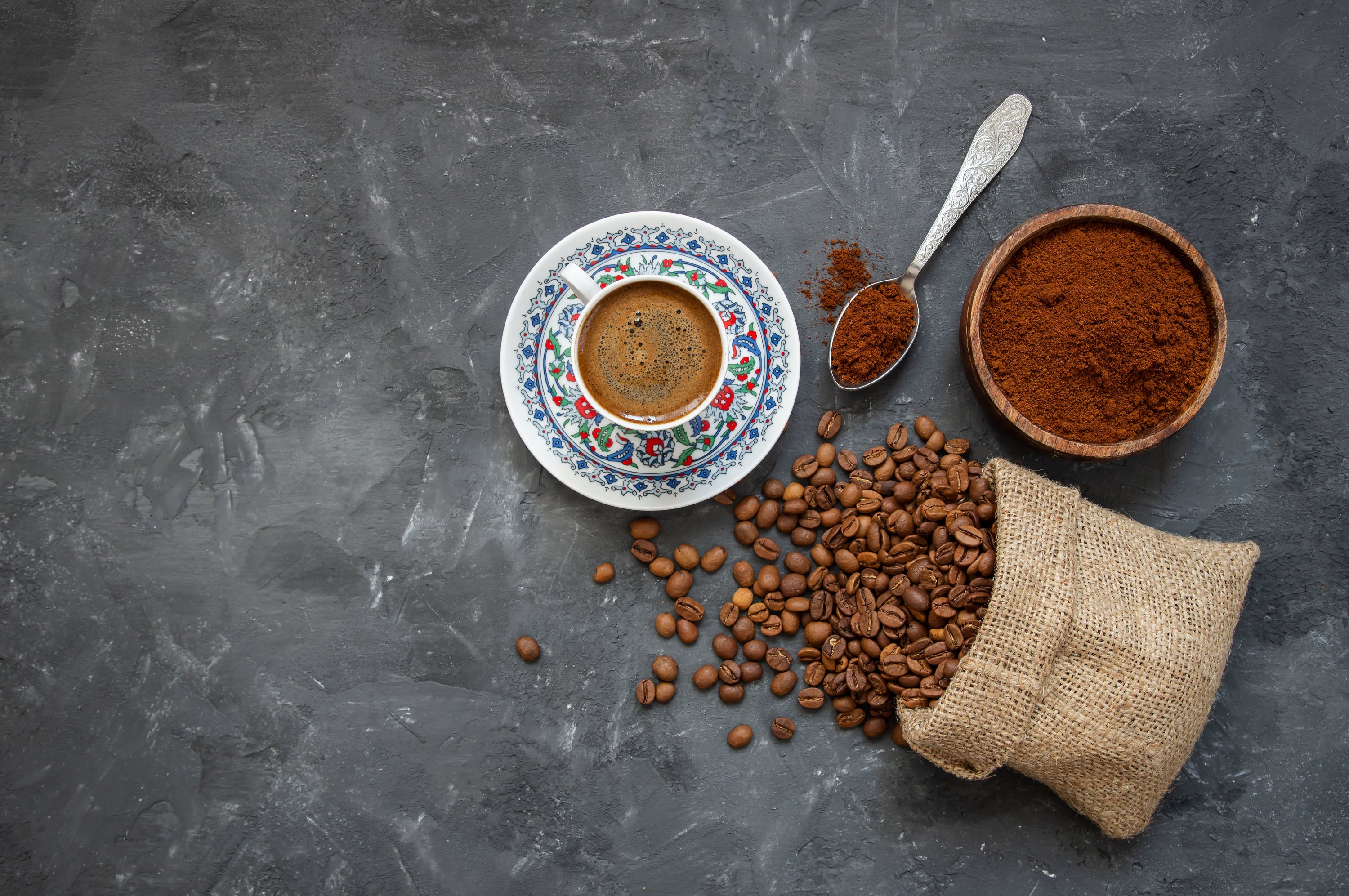
One of the strongest symbols associated with Italy is coffee. Yet this tradition also comes from the East. While information about the earliest forms of coffee is limited, the word itself is believed to derive from the Kaffa region in Ethiopia. In the 16th century, as the Ottomans expanded across the Arabian Peninsula, coffee culture spread over a vast geographical area. The first coffeehouses are known to have opened in Istanbul in the mid-1500s.
From the Ottoman world, coffee reached Europe. The first European coffeehouses are thought to have opened in Venice. Coffee arrived in England in 1650, and by 1670 it had spread to Berlin and Paris, quickly becoming part of daily European life. Even the name of the Italian moka pot derives from the Yemeni port of al-Mukha, from which coffee beans were shipped.
Tea
Tea, now strongly associated with Britain, also originated in the East. In reality, tea was discovered in southwestern China and is believed to have been consumed regularly after the second century B.C.
Tea acquired a strong cultural identity in England thanks to Catherine of Braganza, the Portuguese princess who married King Charles II and introduced the habit of drinking tea at court. Over time, the practice spread to the wider population. One of the key figures in tea’s popularization was Sir Arthur Lipton (1848-1931), who played an active role in its production.
Vanoli explains: “He was not the only one, of course, but he was among those who radically transformed the use of tea and, over the course of the nineteenth century, made that drink the most English thing one could imagine.”
Cultural awareness
Vanoli points out that the lack of understanding of how the East shaped Western culture makes education crucial.
“Education does not only mean schooling. It means working through every form of communication – from cinema to television series, from podcasts to newspapers – anything that can help us avoid convincing ourselves that we are better simply because we have never looked beyond our own doorstep. That is the greatest cognitive mistake one can make: building one’s worldview only on the image one has of oneself.”
Istanbul and origins
Vanoli says that, of all the Eastern countries he has visited, Istanbul is the place that has made the greatest impression on him. “I love Istanbul very much,” he explained, adding that his grandfather was born there.
The Vanoli family originated in Luino, a small town on the border between Italy and Switzerland. Like many Lombards in the mid-19th century, Vanoli’s family migrated to the Ottoman Empire as a highly skilled artisan.
“Unfortunately, my grandfather died when I was still a child. I keep his books. I knew him just enough to fall in love with all of this.” Besides Istanbul, Vanoli also mentions Baghdad as one of the places that deeply impressed him.
Vanoli’s book reveals that today’s Western culture is, in many ways, the result of centuries of cultural blending, shaped by influences coming from the East. As Vanoli himself concludes: “I believe it is important to remember that we exist, we change and sometimes we even improve precisely because we meet one another.”
source https://www.dailysabah.com/arts/from-coffee-to-chess-how-east-shaped-everyday-european-life/news
Categories: Eurasia, Europe, European Union, Turkey, Turks