
by Anadolu Agency
ISTANBUL Jun 10, 2026 –
Edited By Nurbanu Tanrıkulu Kızıl
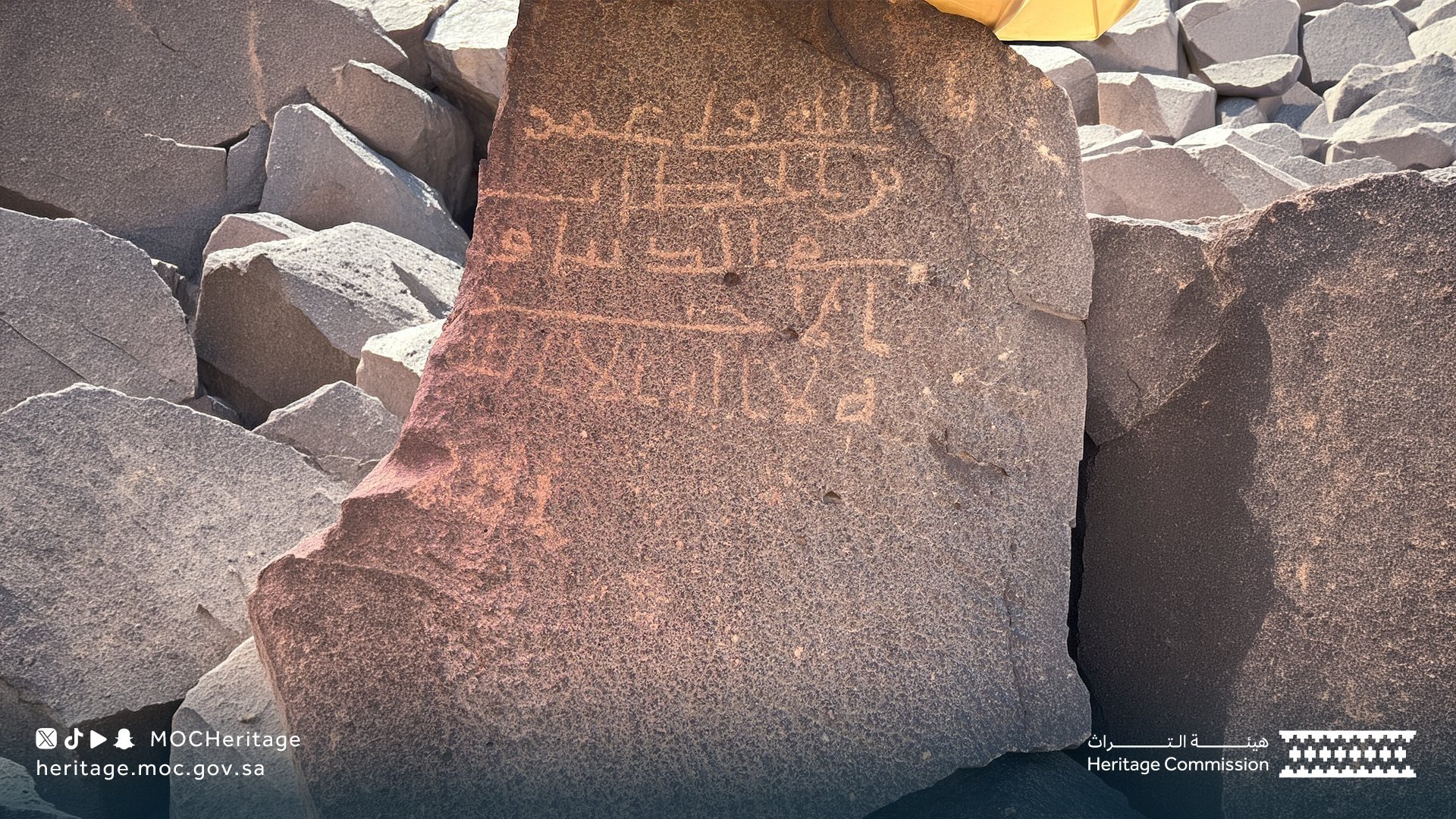

Saudi Arabia’s Heritage Commission announced the discovery of a rock inscription bearing the name of Caliph Umar ibn al-Khattab during archaeological surveys in the Medina region, describing the find as a significant addition to the kingdom’s growing record of early Islamic heritage.
The Heritage Commission revealed Tuesday that the rock inscription mentioned was among 1,774 archaeological findings made during season one and season two of a wide-scale survey mission in the Al Mahd Governorate.
Data provided by the Heritage Commission said survey teams managed to document the presence of 173 unknown archaeological sites, emphasizing the region’s “rich and diverse historical heritage.”
Among the notable findings were 173 rock carvings with the name of Umar ibn al-Khattab, the second caliph of Islam, as well as ancient Arabic poems written in rock.
In line with statistics by the commission, the discoveries consist of 1,259 rock art drawings, 461 Islamic inscriptions, 34 inscriptions in the language of the Thamud, 11 stone structures, three palaces and archaeological structures, two milestones of caravan routes and four wells.
Umar ibn al-Khattab, a close companion of Prophet Muhammad and the second caliph of Islam, led the Muslim community from 634 to 644 CE and played a pivotal role in the early expansion of the Islamic state.
source
Categories: Arab World, History, Islamic history, Saudi Arabia